

Introduction
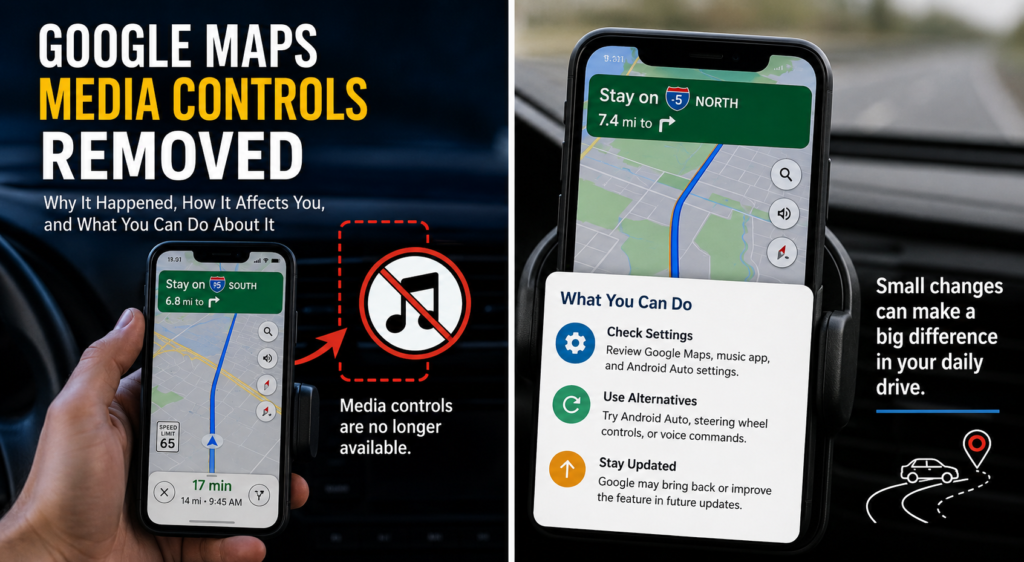
James had just started a three-hour road trip to visit his parents. As always, he connected his phone to his car, opened his favorite music playlist, and launched Google Maps for navigation. Everything seemed perfect until he tried to skip a song without leaving the navigation screen. The familiar media controls were gone.
At first, he thought it was a bug. He restarted his phone, checked his settings, and even reinstalled the app. Nothing worked. Later that evening, he discovered he wasn’t alone. Thousands of users were searching online for the same issue: Google Maps media controls removed.
Small interface changes often have a surprisingly large impact on our daily routines. A feature that once felt invisible suddenly becomes essential the moment it disappears. Understanding why this happened can help users adapt while appreciating how even minor software updates can reshape the digital experiences we rely on every day.
Why Were Google Maps Media Controls Removed?
Software updates often feel like rearranging the furniture in a familiar room. Everything is technically still there, but reaching for what you need suddenly feels awkward. That’s exactly how many users described the experience after noticing that Google Maps media controls had disappeared.
Media controls allowed users to pause, play, skip, or rewind music without switching between applications. For commuters, delivery drivers, and frequent travelers, this simple convenience reduced distractions while driving.
Technology companies constantly evaluate which features people actually use. Sometimes they simplify an application to improve performance, reduce compatibility issues, or prepare for future updates. While these decisions may make sense from a development perspective, they don’t always align with everyday user expectations.
I remember helping a family member troubleshoot this exact issue. We spent nearly thirty minutes checking permissions, Android Auto settings, and music apps before realizing the feature had changed rather than broken. That experience highlights an important truth: users often assume something is wrong when software quietly evolves.
The conversation surrounding Google Maps media controls removed isn’t just about buttons disappearing—it’s about how digital habits become part of our routines.
How the Change Affects Everyday Drivers
Imagine driving through an unfamiliar city while trying to enjoy your favorite podcast. Every few minutes, you need to skip advertisements or replay something you missed. Previously, media controls inside Google Maps made that process effortless. Without them, many users find themselves switching between apps or relying on steering-wheel controls if their vehicles support them.
This seemingly minor adjustment affects different groups in different ways. Daily commuters may experience only a slight inconvenience, but rideshare drivers, truck drivers, and delivery professionals interact with navigation software for hours every day. Small interruptions become significant over time.
My cousin works as a food delivery driver. After the update, he admitted that he missed being able to control music directly within Google Maps because it helped him stay focused on navigation without unnecessary screen changes.
Technology succeeds when it quietly supports our lives instead of demanding our attention. Features like integrated media controls accomplished exactly that. Their absence reminds us that convenience often goes unnoticed until it disappears.
The discussion isn’t merely about entertainment while driving. It’s about minimizing distractions and maintaining a smoother driving experience during long journeys.
Can You Get the Media Controls Back?
One of the first questions users ask after searching Google Maps media controls removed is whether the feature can be restored. The answer depends on several factors, including device type, operating system version, application updates, and connected music services.
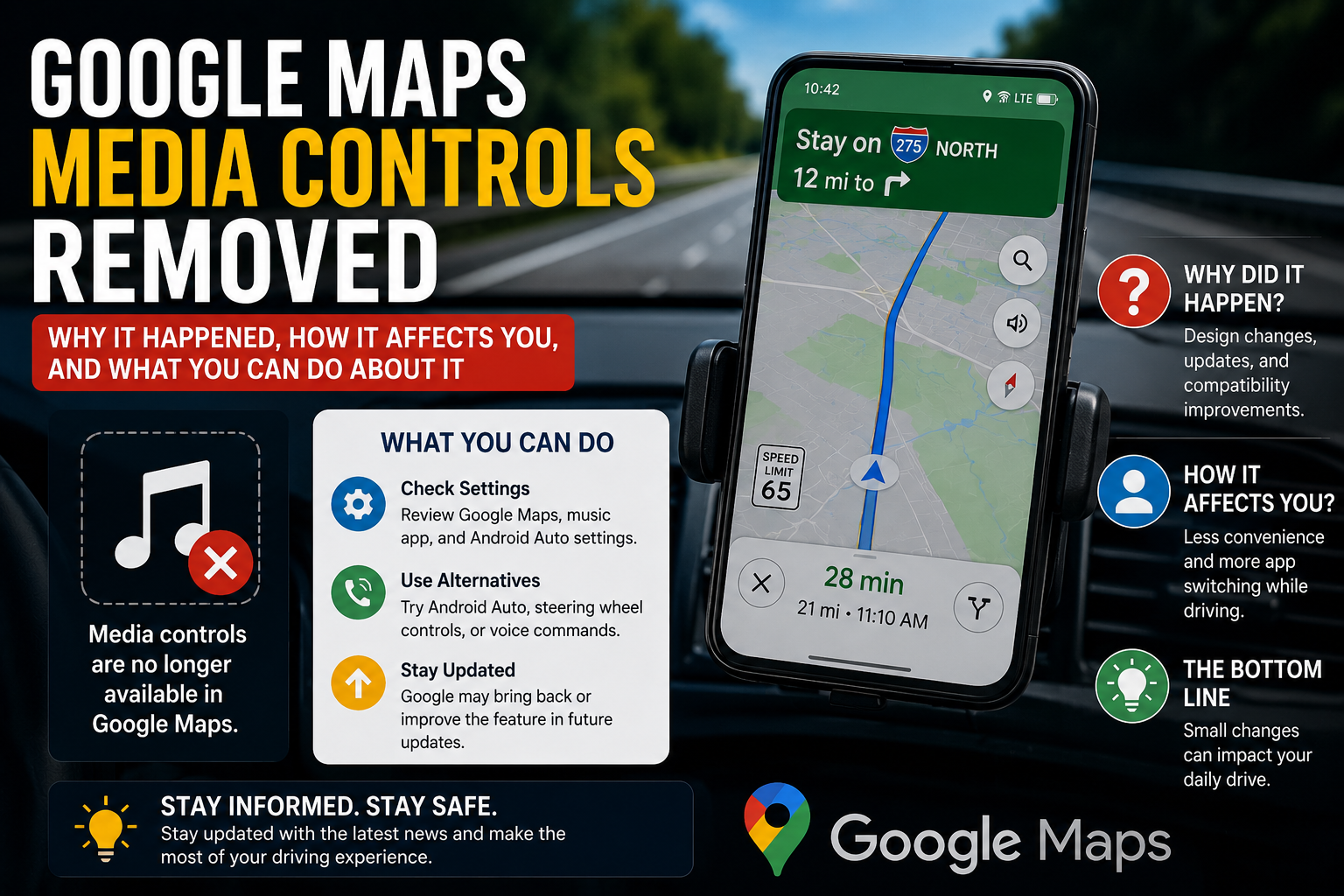
Sometimes the controls disappear because certain settings become disabled after an app update. Checking navigation settings, connected media apps, or Android Auto preferences may resolve the issue for some users. Others may discover that newer versions of the application have changed how media integration works.
Technology rarely follows a perfectly straight path. Features disappear, return, or evolve into entirely new experiences. What seems permanent today could look completely different after the next major software update.
I’ve learned that patience often pays off with modern apps. Developers frequently respond to community feedback, especially when thousands of users report similar concerns. User opinions play a larger role in software development than many people realize.
Rather than assuming the feature is gone forever, many users continue monitoring updates, hoping Google introduces an improved version that balances convenience, safety, and compatibility across different devices.
What This Change Says About Modern Apps
The removal of media controls reveals something much larger than a single software feature. It reflects the ongoing challenge technology companies face when designing products for millions of people with different needs.
Think of software as a living city instead of a finished building. Streets are expanded, traffic patterns change, and new neighborhoods appear. While these improvements benefit many residents, others must adapt to unfamiliar routes.
Google Maps continues to evolve because user expectations constantly change. Some users prioritize clean interfaces, while others value having every possible shortcut available. Balancing simplicity with functionality is one of the biggest challenges developers face.
As someone who enjoys exploring new apps, I’ve noticed that the most successful platforms aren’t necessarily those with the most features. They’re the ones that make everyday tasks feel effortless.
The discussion surrounding Google Maps media controls removed reminds us that digital products are never truly finished. They grow alongside the people who use them, sometimes in ways that surprise us, frustrate us, and occasionally improve our daily lives in unexpected ways.
Frequently Asked Questions
Q1. Why were Google Maps media controls removed?
The feature appears to have changed due to updates, compatibility adjustments, or design decisions within the app. Google occasionally modifies features to improve performance or simplify the interface. The exact experience may differ depending on the user’s device and software version.
Q2. Can I restore Google Maps media controls?
In some cases, checking navigation settings, connected music services, or Android Auto options may help. However, if the feature has been removed in your app version, there may not be a direct way to restore it. Future updates could introduce alternative solutions.
Q3. Does this affect Android Auto users?
Some Android Auto users may notice different behavior depending on their software version and vehicle compatibility. Android Auto often provides its own media controls, which can reduce the impact of changes inside Google Maps. Experiences vary across devices.
Q4. Why are users upset about Google Maps media controls being removed?
Many people appreciated the convenience of controlling music without leaving the navigation screen. The change disrupted routines that users had developed over years of driving. Even small interface changes can significantly affect the overall user experience.
Q5. Is Google likely to bring the feature back?
Technology companies frequently adjust features based on customer feedback. While there’s no guarantee, strong user demand can influence future updates. Keeping Google Maps updated ensures access to any improvements that may be released.
Q6. What are the alternatives if media controls are unavailable?
Users can rely on Android Auto, Apple CarPlay, steering-wheel media buttons, voice assistants, or quick app switching depending on their vehicle and device. These alternatives help maintain convenient music control while navigating safely.
Conclusion
Software changes rarely generate headlines until they interrupt something people use every day. The discussion around Google Maps media controls removed demonstrates how deeply integrated digital tools have become in our daily routines. What once seemed like a small convenience turned out to be an important part of many drivers’ experiences.
Throughout this article, we’ve explored why users noticed the change, how it affects everyday driving, possible ways to restore functionality, and what this situation reveals about modern software development. Every update represents a balancing act between innovation, simplicity, compatibility, and user expectations.