

Introduction
A young boy once asked his grandfather why every luxury car looked different, but one silver emblem always caught his eye. The grandfather smiled, pointed to the shining badge on the front of his Lincoln, and said, “Some logos don’t just represent a car—they represent a promise.” That simple answer stayed with the boy for years. Long after the drive ended, he remembered the elegant star-shaped emblem more vividly than the road itself.
That memory reflects the power of great design. A logo isn’t merely decoration; it’s the face of a brand and often the first thing people notice. The Lincoln logo has quietly built a reputation for elegance, prestige, and craftsmanship. While trends in automotive design have changed dramatically over the decades, this distinctive emblem has remained a recognizable symbol of luxury. Its clean lines and sophisticated appearance continue to capture attention without shouting for it.
The History Behind the Lincoln Logo
Every famous logo begins with a story, and the Lincoln logo is no exception. When the Lincoln brand entered the luxury automobile market, it needed an identity that reflected refinement rather than extravagance. Instead of relying on flashy colors or complicated artwork, the designers embraced simplicity.
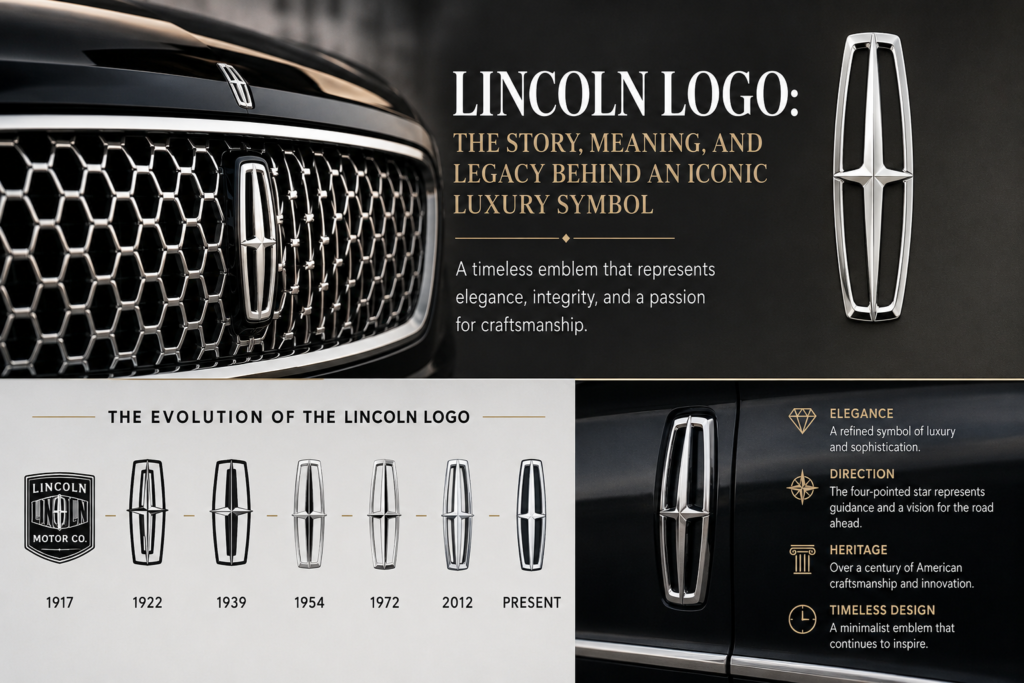
Over the years, the logo evolved into the polished four-pointed star that many people recognize today. Although various theories exist about its exact meaning, its balanced design has consistently communicated confidence and class. It doesn’t rely on unnecessary details because true luxury rarely needs to prove itself.
Imagine walking into a beautifully designed hotel lobby. Everything feels calm, organized, and intentional. That’s the same impression the Lincoln emblem creates. Rather than demanding attention, it quietly earns admiration. This subtle approach has helped the logo remain timeless while many other automotive badges have undergone dramatic redesigns. Its lasting appeal proves that elegant simplicity often outlives passing design trends.
What Does the Lincoln Logo Mean?
One of the reasons people continue searching for the Lincoln logo is its mysterious symbolism. Unlike logos that clearly depict animals or initials, Lincoln’s emblem leaves room for interpretation, making it even more memorable.
Many automotive enthusiasts believe the four-pointed star represents a compass, symbolizing excellence in every direction. Others see it as a crystal or a shining star that reflects premium quality and achievement. Regardless of the official explanation, the logo successfully communicates ideas of precision, balance, and sophistication.
Think about a perfectly tailored suit. It doesn’t need bright colors or oversized patterns to stand out. Its craftsmanship speaks for itself. The Lincoln logo works the same way. Its polished chrome finish and symmetrical design create an impression of confidence rather than excess. That understated elegance perfectly matches the personality of Lincoln vehicles, which focus on comfort, quiet luxury, and refined driving experiences instead of flashy performance alone.
How the Lincoln Logo Has Evolved
Brands evolve just like people. As technology advances and customer expectations change, visual identities must adapt while preserving their core values. The Lincoln logo has experienced subtle refinements throughout its history, yet its overall character remains remarkably consistent.
Earlier versions featured different styling details, but the modern emblem embraces cleaner edges, improved proportions, and a more contemporary finish. These updates reflect today’s minimalist design philosophy without abandoning the logo’s heritage.
Imagine renovating a century-old home. You install modern lighting and updated appliances while preserving the beautiful architecture that makes the house unique. That’s exactly how Lincoln has approached its branding. Instead of replacing its identity, the company has refined it to suit modern tastes.
Today’s logo appears equally impressive on traditional luxury sedans and cutting-edge SUVs. Whether illuminated on a grille or displayed digitally, it continues to project sophistication while staying relevant in an increasingly digital automotive world.
Why the Lincoln Logo Still Matters Today
In a marketplace filled with hundreds of vehicle choices, branding has become more important than ever. A logo often creates the first emotional connection between a customer and a vehicle. The Lincoln logo succeeds because it represents an experience rather than just a manufacturer.
When someone sees the emblem, they often associate it with smooth rides, premium interiors, advanced technology, and classic American luxury. That’s a remarkable achievement for a simple geometric design.
Consider how people recognize familiar faces in a crowded room. A trusted logo creates the same instant recognition. It builds confidence before a single word is spoken or a single mile is driven.
As electric vehicles and digital innovation reshape the automotive industry, the Lincoln logo continues serving as a bridge between tradition and progress. It reminds drivers that while technology changes, timeless values like craftsmanship, elegance, and comfort never go out of style.
Frequently Asked Questions
Q1. What does the Lincoln logo symbolize?
The Lincoln logo is widely believed to symbolize luxury, precision, and excellence. Many interpret its four-pointed star as a compass pointing in every direction. Regardless of its exact meaning, it reflects sophistication and premium craftsmanship.
Q2. Has the Lincoln logo changed over the years?
Yes, the logo has undergone several subtle refinements throughout its history. Modern versions feature cleaner lines and a more polished appearance while preserving the original design concept. These updates help the logo remain contemporary.
Q3. Why is the Lincoln logo shaped like a star?
Although Lincoln has never provided one universally accepted explanation, the star-like design is commonly associated with guidance, prestige, and excellence. Its symmetrical appearance also reinforces ideas of balance and precision.
Q4. Who designed the Lincoln logo?
The exact origin of the modern Lincoln logo remains uncertain, with several theories surrounding its creation. Over time, designers have refined the emblem to better match evolving automotive styling. Despite these updates, its signature look has remained consistent.
Q5. Why is the Lincoln logo considered iconic?
Its minimalist design has remained elegant for decades, making it instantly recognizable. The logo successfully communicates luxury without relying on complicated graphics. That timeless simplicity has helped establish its iconic reputation.
Q6. What makes the Lincoln logo different from other luxury car logos?
Unlike logos featuring animals, letters, or shields, the Lincoln emblem uses a clean geometric design. Its understated appearance reflects quiet confidence instead of bold extravagance. This unique approach aligns perfectly with Lincoln’s philosophy of refined luxury.
Conclusion
The Lincoln logo is far more than a polished badge attached to the front of a luxury vehicle. It tells a story of heritage, craftsmanship, and thoughtful design that has remained relevant through changing generations. Its elegant simplicity demonstrates that true luxury doesn’t always seek attention—it naturally earns respect through consistency and quality.