

Introduction
Emma wanted to browse public social media profiles for inspiration before launching her own photography page. She wasn’t interested in interacting or leaving a digital trail—she simply wanted to study creative ideas and understand current trends. During her search, she came across the name StealthGram, a term that sparked curiosity about privacy-focused browsing.
Many internet users share similar questions. They wonder whether it’s possible to explore publicly available content while protecting their own privacy online. As digital awareness grows, so does interest in tools that emphasize anonymous browsing and secure internet use.
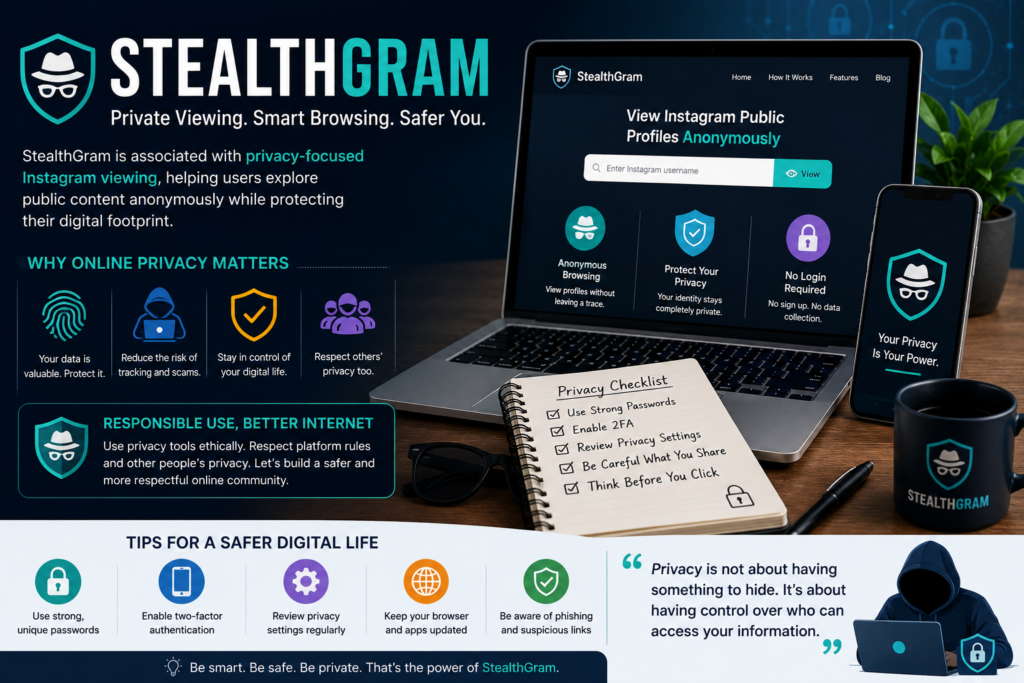
StealthGram has become a name associated with privacy-focused Instagram viewing. Whether people search for it out of curiosity or practical reasons, the growing interest highlights a much broader conversation about online privacy, responsible browsing, and digital security. Understanding both the opportunities and the limitations of privacy tools helps users make informed decisions while respecting the privacy of others.
Why Digital Privacy Matters More Than Ever
Every click we make online leaves some form of digital footprint. Websites collect analytics, apps store preferences, and online services often track user behavior to improve experiences or deliver personalized content.
Imagine walking across fresh snow. Every step leaves a visible footprint that tells others where you’ve been. The internet works similarly, except the footprints are digital rather than physical. Many users naturally seek ways to reduce unnecessary data collection while browsing the web.
Privacy-focused tools reflect this growing concern. They encourage people to think carefully about what information they share online and how websites handle their personal data. Responsible privacy practices include using strong passwords, enabling two-factor authentication, keeping software updated, and understanding app permissions.
The goal is not secrecy but security. Protecting personal information helps reduce risks such as identity theft, phishing attacks, and unauthorized access while allowing users to enjoy online services more confidently.
Understanding Privacy-Focused Viewing Tools
Privacy tools are designed to help users browse the internet while minimizing unnecessary exposure of their personal information. Some focus on secure browsing, while others emphasize anonymous access to publicly available content.
Think of wearing sunglasses on a sunny day. The purpose is not to hide from others but to improve comfort and protect your eyes. Privacy tools operate in a similar way by helping users maintain greater control over their digital presence.
StealthGram is often discussed in relation to viewing publicly available social media content. Regardless of the tool someone chooses, users should always respect platform rules, intellectual property, and other people’s privacy.
Responsible use means understanding that privacy technology should never be used to harass, deceive, or violate someone else’s rights. Instead, it should support safe browsing habits and encourage thoughtful digital citizenship.
Technology is most valuable when it protects users while promoting ethical behavior across online communities.
Balancing Privacy with Responsibility
Privacy and responsibility should always work together. While protecting your own information is important, respecting the rights and expectations of others is equally essential.
Imagine driving on a busy road. Every driver values personal freedom, but everyone also follows traffic rules to keep others safe. Digital privacy works in much the same way. Individual freedoms become stronger when balanced with mutual respect.
Many social media platforms already provide privacy settings that allow users to control who sees their content. Learning how these settings work often provides better long-term protection than relying solely on third-party tools.
Businesses, educators, journalists, and researchers also benefit from understanding privacy principles. Responsible browsing supports professional ethics while maintaining trust with audiences and clients.
Ultimately, digital privacy is not about becoming invisible—it is about making informed decisions regarding the information we share and the technologies we use.
The Future of Online Privacy
Privacy has become one of the defining conversations of the digital age. Governments, technology companies, and users all continue discussing how to balance innovation with personal data protection.
Think of building a house with stronger locks, better lighting, and secure windows. These improvements do not isolate the home—they simply make it safer. The future of online privacy follows the same philosophy by improving security without limiting legitimate internet use.
Artificial intelligence, stronger encryption, privacy-focused browsers, and transparent data policies are likely to shape the next generation of digital services. Users are becoming more aware of how their information is collected and increasingly expect companies to provide greater transparency.
As awareness grows, responsible privacy practices will become an essential digital skill rather than an optional extra. Whether someone is exploring StealthGram or simply learning about online security, the most important lesson remains the same: protecting privacy begins with informed choices and respectful behavior.
Frequently Asked Questions
Q1. What is StealthGram?
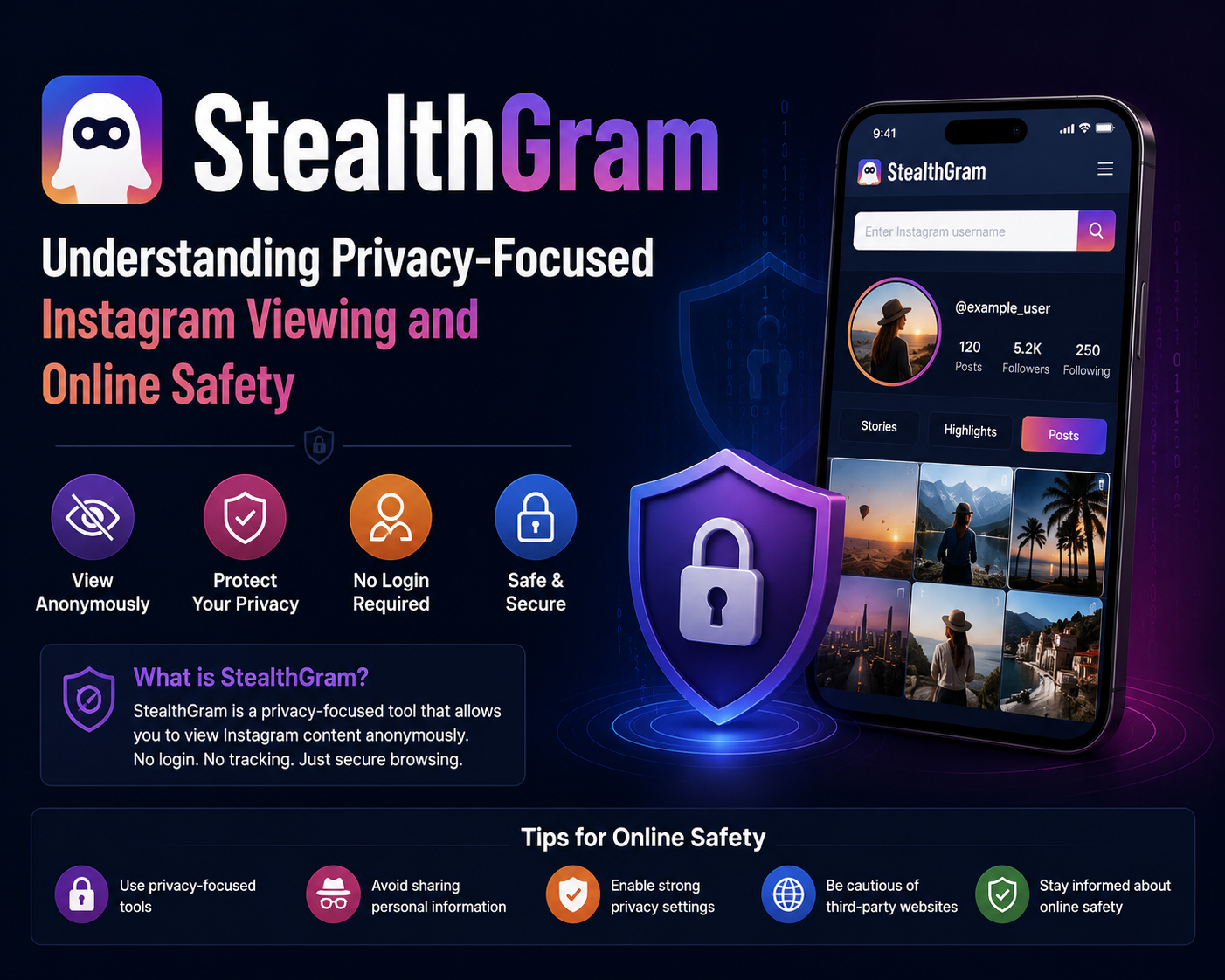
StealthGram is commonly associated with privacy-focused viewing of publicly available Instagram content. People often search for it when exploring anonymous browsing or privacy-related tools. Users should always respect platform policies and other people’s privacy.
Q2. Why do people search for StealthGram?
Many users are interested in protecting their online privacy while browsing publicly available information. Others are simply curious about how privacy-focused tools work. Understanding digital privacy has become increasingly important in today’s online environment.
Q3. Is online privacy important?
Yes. Protecting personal information helps reduce security risks, improve account safety, and give users greater control over their digital identities. Responsible privacy practices also support safer internet experiences.
Q4. How can I improve my online privacy?
Using strong passwords, enabling two-factor authentication, reviewing privacy settings, updating software regularly, and understanding app permissions are excellent first steps. These habits provide meaningful protection without requiring advanced technical knowledge.
Q5. Are privacy tools a replacement for good security habits?
No. Privacy tools work best when combined with responsible online behavior. Safe browsing, secure passwords, and awareness of phishing attempts remain essential components of digital security.
Q6. What is the future of online privacy?
Future developments will likely include stronger encryption, better user controls, greater transparency, and more privacy-focused technologies. As digital awareness grows, individuals and organizations will continue prioritizing responsible data protection.
Conclusion
StealthGram represents a growing interest in online privacy and responsible digital browsing. As internet users become increasingly aware of how personal information is collected and shared, the demand for privacy-focused technologies continues to expand. At the same time, genuine online security depends not only on software but also on informed decision-making, ethical behavior, and respect for others’ privacy.
The internet offers extraordinary opportunities for communication, learning, and creativity, but those opportunities are strongest when built on trust and responsible use. Understanding privacy tools is only one part of becoming a confident digital citizen. The habits we develop—protecting our accounts, respecting platform guidelines, and thinking carefully about the information we share—ultimately shape our online experiences. Technology will continue evolving, but the importance of balancing privacy with responsibility will remain constant, helping create a safer and more trustworthy digital world for everyone.