

Introduction
David stood in front of an old family photo album, tracing his fingers over faded pictures of grandparents who had once lived in Eastern Europe before settling in Israel. Across the pages, he found memories that connected two distant lands—Russia and Israel. While their governments often appeared on opposite sides of global headlines, the personal stories of millions of families revealed a far deeper connection.
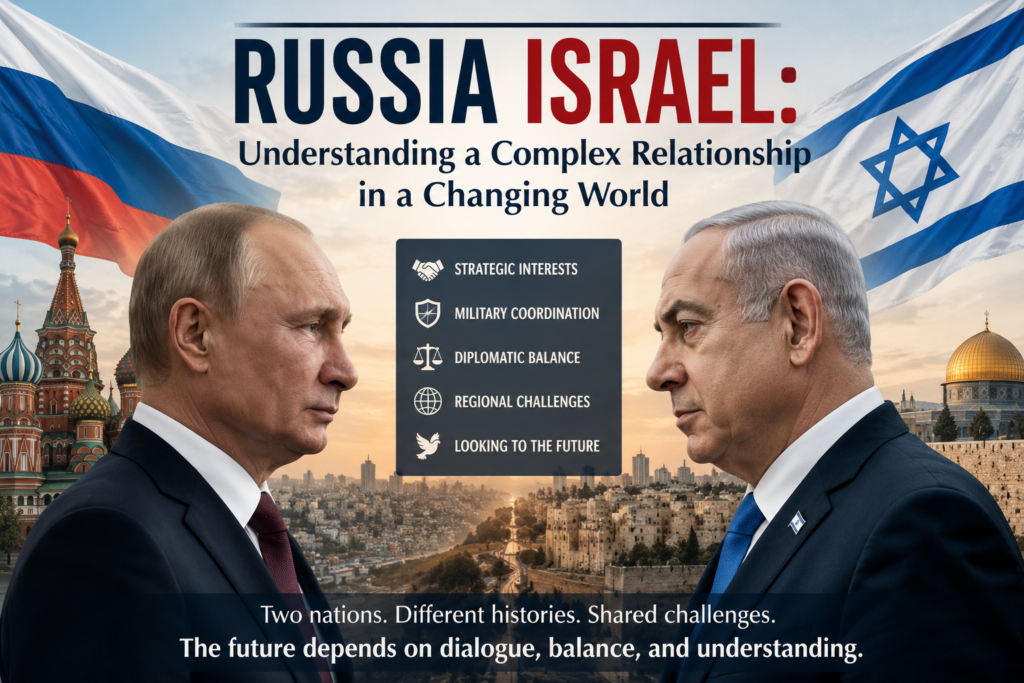
The relationship between Russia and Israel is much more than diplomatic meetings or political disagreements. It is a story shaped by migration, security concerns, economic interests, cultural ties, and shifting international alliances. Understanding this relationship requires looking beyond breaking news and seeing the human experiences that continue to influence decisions made by leaders today. Like two neighbors separated by history yet connected by circumstance, Russia and Israel continue to navigate one of the world’s most fascinating diplomatic relationships.
A History That Continues to Shape the Present
The relationship between Russia and Israel has never followed a straight path. It has experienced moments of cooperation, periods of tension, and unexpected partnerships. Shortly after Israel declared independence in 1948, the Soviet Union was among the first major powers to recognize the new nation. At that time, many believed a positive partnership might develop.
History, however, had different plans. During the Cold War, the Soviet Union strengthened its ties with several Arab countries, creating political distance between Moscow and Jerusalem. Yet ordinary people continued building invisible bridges. Hundreds of thousands of Jewish immigrants from the former Soviet Union later moved to Israel, bringing language, traditions, science, music, and business experience with them.
Imagine a river changing direction over decades. Although the current shifts, traces of the old path remain visible. Russia and Israel share that kind of historical connection. Their governments may disagree on many issues, but family relationships, cultural exchanges, and historical memories continue to influence how both societies view each other.
Security Interests Often Define the Relationship
If history provides the foundation, security concerns provide the daily reality of Russia-Israel relations. Geography has placed Israel in one of the world’s most sensitive regions, while Russia has long sought influence across the Middle East. As a result, their interests sometimes overlap and sometimes collide.
One of the clearest examples is Syria. Russia has maintained a strong military presence there, while Israel closely monitors security threats near its borders. Despite having different strategic priorities, both countries have often tried to avoid direct military confrontation through communication between their defense officials. This demonstrates that diplomacy is sometimes less about friendship and more about preventing dangerous misunderstandings.
Think of two drivers traveling on the same narrow mountain road. They may have different destinations, but they still need to communicate to avoid accidents. Russia and Israel often operate in a similar way. Even during periods of political disagreement, practical coordination has remained important because the cost of miscalculation could be extremely high.
Trade, Technology, and Human Connections
Political headlines often overshadow another important part of the Russia-Israel relationship: people. Business leaders, scientists, artists, students, and entrepreneurs have helped create lasting connections between the two countries.
Israel has become known for innovation, cybersecurity, agriculture, and medical technology. Russia, with its large market and scientific traditions, has provided opportunities for cooperation in research and commerce. Although international sanctions and geopolitical tensions have complicated many economic relationships in recent years, human connections remain difficult to erase completely.
A simple visit to an Israeli city reveals Russian bookstores, cultural festivals, restaurants, and community centers that celebrate shared heritage. Many families speak both Russian and Hebrew at home. Children grow up hearing stories from grandparents who experienced life in the Soviet Union while building new lives in Israel.
These personal relationships remind us that international politics is never only about governments. Behind every diplomatic decision are millions of individuals whose lives cross borders through education, business, family, and culture.
Modern Challenges and an Uncertain Future
Recent global events have added new layers of complexity to Russia-Israel relations. Conflicts in Europe and the Middle East have forced governments to balance national interests with international expectations. Every statement, diplomatic meeting, or humanitarian decision is carefully examined by allies and critics alike.
Israel faces difficult choices as it seeks to maintain security while preserving relationships with major global powers. Russia, meanwhile, continues pursuing its broader strategic goals despite increasing international pressure. Neither country operates in isolation, making every diplomatic move part of a much larger international puzzle.
The future of Russia-Israel relations will likely depend on flexibility rather than fixed alliances. Diplomatic relationships are rarely permanent. They evolve as leadership changes, regional conflicts develop, and economic priorities shift. Like experienced chess players, both countries constantly evaluate new positions before making their next move.
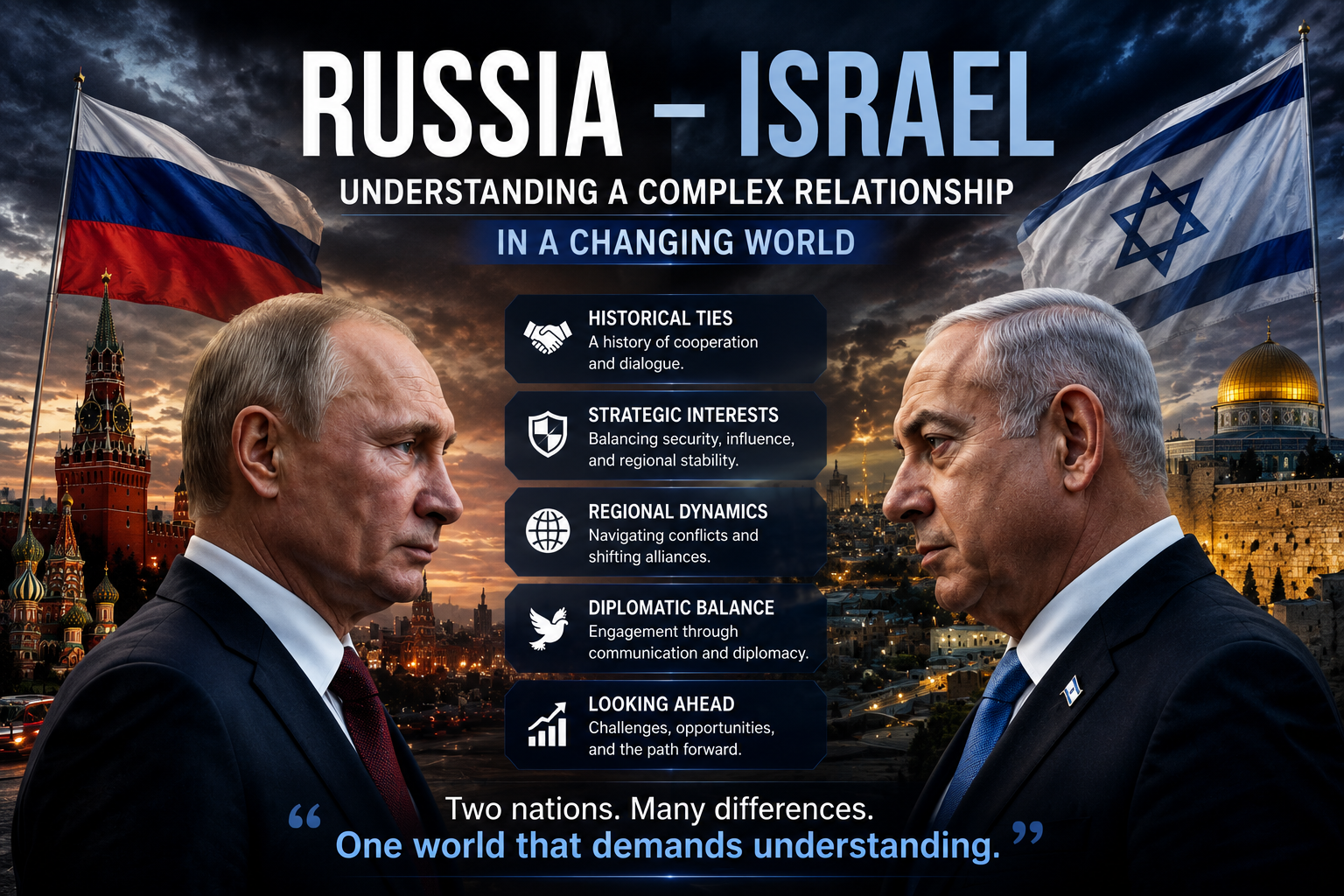
Rather than expecting simple answers, observers should recognize that international relations often involve balancing competing interests. Russia and Israel illustrate how history, security, economics, and human connections can exist together even during periods of political disagreement.
Frequently Asked Questions
Q1. Why are Russia and Israel important to each other?
Russia and Israel share historical, cultural, economic, and security connections. A large Russian-speaking community lives in Israel, creating strong people-to-people ties. Both countries also have interests in Middle Eastern stability, making communication important even when political differences exist.
Q2. Did Russia recognize Israel after its independence?
Yes. The Soviet Union was among the first countries to recognize Israel after its declaration of independence in 1948. However, relations changed significantly during the Cold War as geopolitical priorities evolved, leading to periods of both cooperation and tension.
Q3. Why is Syria important in Russia-Israel relations?
Syria is strategically important because Russia maintains military influence there, while Israel closely watches security developments near its borders. Both governments have often sought ways to prevent direct military misunderstandings despite having different regional objectives.
Q4. How do Russian immigrants influence Israeli society?
Russian-speaking immigrants have contributed to Israeli science, education, technology, medicine, culture, sports, and business. Their influence can be seen across many sectors of society, helping strengthen cultural links between Russia and Israel beyond government relations.
Q5. Are Russia and Israel economic partners?
The two countries have cooperated in trade, technology, agriculture, healthcare, and scientific research. However, international sanctions, regional conflicts, and changing global politics have affected some areas of economic cooperation in recent years.
Q6. What is the future of Russia-Israel relations?
The future will likely remain complex rather than predictable. Security concerns, regional developments, and global diplomatic changes will continue shaping the relationship. While disagreements may persist, practical communication is expected to remain valuable for both countries.
Conclusion
The story of Russia Israel relations cannot be explained by a single headline or one political event. It is a relationship built over generations through migration, shared history, cultural exchange, diplomacy, and difficult strategic decisions. At times the partnership has been cooperative, while at other moments it has been marked by disagreement and caution. Yet the human connections between ordinary people have often survived political change.
Looking ahead, both countries will continue facing new challenges that require careful judgment rather than simple solutions. History teaches us that international relationships are constantly evolving, influenced by changing leadership, regional conflicts, and global events. Understanding Russia Israel relations means recognizing both the political realities and the personal stories that connect millions of lives. Sometimes the strongest bridges are not built through perfect agreement but through the willingness to keep talking, even during the most uncertain times.