

Introduction
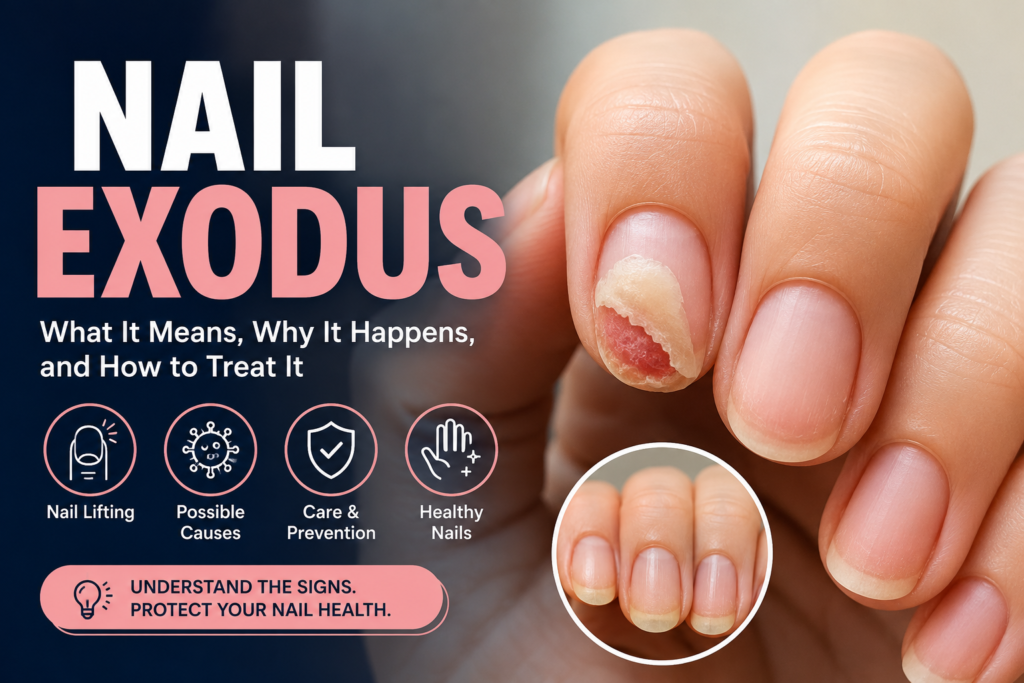
Maya noticed something strange while getting ready for work one morning. She reached for her favorite nail polish, but before applying it, she saw that one of her nails looked different. It seemed weaker, thinner, and almost as if the nail itself was slowly “leaving” its normal place.
At first, she ignored it. A few days later, another nail started changing.
That small discovery made her realize something many people overlook: nails can tell stories. Changes in their shape, strength, color, or attachment may sometimes reflect everyday habits, physical stress, or an underlying issue.
The phrase nail exodus can sound dramatic, but it is an interesting way to describe situations where nails appear to loosen, separate, shed, or move away from their usual healthy appearance. Understanding what may be happening is the first step toward responding calmly and appropriately.
What Does Nail Exodus Really Mean?
“Nail exodus” is not generally a formal medical diagnosis. Instead, it can be used as an expressive phrase for noticeable nail changes, particularly when a nail begins separating from the nail bed or appears to be growing out unusually.
Imagine a nail as a small protective roof attached to the end of your finger. Under normal circumstances, that roof stays securely connected to its foundation. When something interferes with that relationship, the nail can begin to lift or change.
One common example is onycholysis, a condition in which the nail plate separates from the underlying nail bed. This may happen gradually rather than suddenly, which is why someone might not notice it immediately.
The important thing is not to panic when a nail changes. Nails naturally grow, experience wear, and occasionally suffer minor damage. However, persistent or unexplained separation deserves attention.
Rather than treating the phrase “nail exodus” as a diagnosis, think of it as a useful reminder: your nails have changed, and it may be worth finding out why.
Why Do Nails Start Separating or Changing?
There isn’t always one simple explanation for nail changes. Sometimes the cause is surprisingly ordinary.
Think about someone who spends Saturday afternoon cleaning the house without gloves. Their hands are exposed to water, detergents, and repeated friction for hours. Add frequent handwashing, nail polish removal, or aggressive manicuring, and the nails can experience quite a workout.
Physical trauma is another possibility. A nail can be bumped, pinched, filed too aggressively, or damaged during a manicure. Repeated pressure may eventually cause visible changes.
Certain fungal infections can also affect nails, often producing changes in thickness, texture, color, or attachment. Other skin conditions may influence nail health as well.
There are also situations where nail changes are connected with broader health issues or medications. This is why it can be difficult to determine the cause simply by looking at a photograph.
The story behind the nail matters. When did the change begin? Was there an injury? Have there been changes to your manicure routine? Are other nails affected? Those details can help provide useful clues.
Everyday Habits Can Make a Bigger Difference Than You Think
Sometimes the answer isn’t hidden in an unusual disease or dramatic event. It may be sitting beside your bathroom sink.
Consider a person who constantly removes gel polish, pushes back cuticles, files the nail surface, and applies another manicure immediately. Each individual step might seem harmless, but repeated stress can add up.
Nails are not made of glass, but they are not indestructible either. Excessive filing can thin them. Picking at polish can pull away layers. Frequent exposure to water and cleaning products can leave nails feeling more vulnerable.
Another overlooked habit is using fingernails as tools. Opening packages, scraping labels, or lifting objects with the tips of your nails can create tiny injuries that become more noticeable later.
A healthier approach is to treat nails more like fabric than machinery. You wouldn’t repeatedly pull, stretch, and scrape a delicate fabric and expect it to remain perfect forever.
Giving nails periods of rest, keeping them reasonably trimmed, moisturizing the surrounding skin, and protecting hands during household cleaning can all support better nail care.
Small changes can sometimes prevent a small problem from becoming a recurring one.
When Should You Take Nail Changes Seriously?
Not every unusual nail is a reason for alarm. A single nail may look strange after an injury, and a damaged nail can take considerable time to grow out.
However, persistent changes should not simply be covered with polish and forgotten.
Pay attention if a nail repeatedly separates from the nail bed, becomes unusually discolored, develops significant thickening, or changes dramatically without an obvious explanation. Pain, swelling, drainage, bleeding, or signs of infection are especially important reasons to seek professional medical advice.
It is also useful to look beyond one nail. If several fingernails or toenails begin changing around the same period, the pattern may provide a more meaningful clue than one isolated nail.
A healthcare professional can examine the nail and surrounding skin and determine whether further testing is appropriate. This is much more reliable than trying to diagnose yourself through online photographs.
The best mindset is simple: don’t catastrophize, but don’t dismiss persistent changes either. Your nails are worth observing without becoming obsessed with every tiny imperfection.
Caring for Nails After Damage
Once a nail has been damaged or separated, patience becomes one of the most important parts of care.
A fingernail does not simply repair itself overnight. Healthy growth takes time, so the visible result of good habits may not appear immediately.
Avoid pulling at loose nail material. If part of a nail is detached, attempting to tear it away can create additional injury. Keeping nails clean and protecting them from repeated trauma can also be helpful.
Moisturizing the hands and nails regularly can make everyday nail care more comfortable. Gloves can be useful when working with household cleaners or spending long periods with your hands in water.
It is also worth reconsidering aggressive cosmetic routines. If your nails are already weak or damaged, constantly covering them with another hard treatment may not address the underlying problem.
Imagine renovating a house with a cracked foundation. Painting the walls might make the building look better temporarily, but it doesn’t solve the foundation problem.

The same principle applies to nails: appearance matters, but healthy underlying tissue matters more.
Frequently Asked Questions
Q1. What does nail exodus mean?
Nail exodus is an informal phrase rather than a standard medical diagnosis. It can describe noticeable nail changes such as lifting, separation, shedding, or unusual growth. One possible medical condition associated with nail separation is onycholysis.
Q2. Why is my nail lifting from the nail bed?
A nail may lift because of trauma, repeated exposure to irritating substances, manicuring habits, infections, or certain skin and health conditions. The exact cause cannot always be identified from appearance alone. If the change persists or worsens, a healthcare professional can evaluate it.
Q3. Can nail polish cause nails to separate?
Nail polish itself is not automatically harmful, but repeated manicuring, aggressive removal, excessive filing, or picking at polish can contribute to nail damage. Gel and artificial nail procedures may also put mechanical stress on the natural nail. Giving damaged nails a break from aggressive treatments may be sensible.
Q4. How long does it take for a damaged fingernail to grow out?
Fingernails grow gradually, so visible recovery can take weeks or months depending on the extent and location of the damage. A nail that has been significantly affected may require several months to completely grow out. Patience is important because there is no instant replacement for natural nail growth.
Q5. Should I remove a nail that is already loose?
It is generally better not to pull or tear away a loose nail yourself. Doing so can cause additional trauma to the nail bed or surrounding tissue. If the nail is significantly detached, painful, injured, or showing signs of infection, seek professional advice.
Q6. When should I see a doctor about nail changes?
Consider getting medical advice when a nail change is persistent, unexplained, painful, spreading to other nails, or accompanied by swelling, drainage, bleeding, or significant discoloration. Professional evaluation can help distinguish ordinary damage from an infection or another condition. Early attention may also prevent further problems.
Conclusion
Nail exodus may sound like a strange phrase, but it points toward a very real lesson: unusual nail changes should not automatically be ignored or feared.
Your nails experience more daily stress than you might realize. Manicures, cleaning chemicals, repeated washing, injuries, picking, and simple wear can all influence their appearance. At other times, nail separation or unusual growth may deserve professional evaluation.
The smartest approach is neither panic nor denial. Observe the change, think about recent habits or injuries, protect the nail from additional damage, and seek medical advice when the situation is persistent or concerning.
Healthy nails are not about achieving flawless perfection. They are about paying attention to small signals and treating your body with patience.
Sometimes, the smallest change at your fingertips can be a reminder to slow down, look closer, and take better care of yourself.