

Introduction
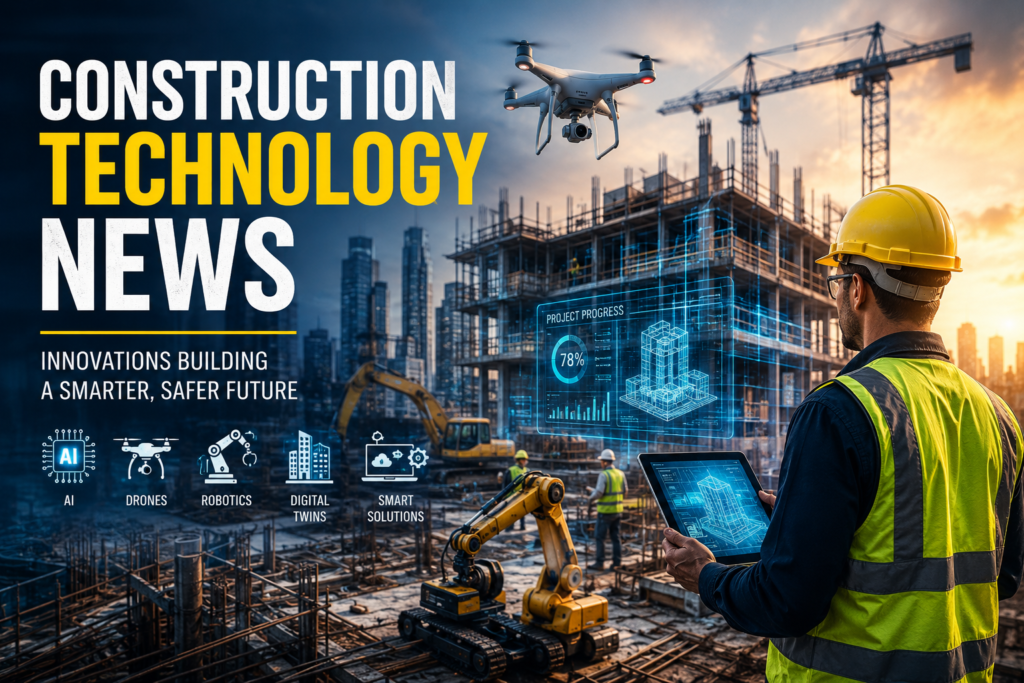
At 6:30 a.m., a construction manager arrives at a busy building site and notices something unusual. The workers are already moving efficiently, materials are being tracked digitally, and a drone is scanning the structure overhead. On a tablet, the manager can see project progress without walking across the entire site.
This scene would have sounded futuristic a few years ago. Today, it represents a growing reality across the construction industry.
Construction technology news is no longer simply about machines and gadgets. It is about how artificial intelligence, robotics, digital twins, advanced materials, drones, and connected software are changing the way people build homes, offices, roads, bridges, and entire cities.
1. AI Is Becoming a Construction Co-Pilot
Artificial intelligence is quickly becoming one of the most discussed subjects in construction technology news. But its most interesting role may not be replacing workers. Instead, AI is increasingly acting like a second pair of eyes for project teams.
Imagine a project manager preparing a complex schedule. Traditionally, identifying possible delays could require hours of reviewing documents, schedules, weather information, workforce availability, and material deliveries. AI-powered systems can analyze large amounts of information and help identify patterns that humans might overlook.
The real value becomes clearer when something goes wrong. A delayed shipment, unexpected weather event, or design change can create a chain reaction. AI tools can help teams examine different scenarios before making decisions.
Think of AI as a construction co-pilot. The human remains responsible for steering the project, while technology helps identify hazards, organize information, and reveal possible routes forward.
This does not mean every construction company needs an expensive AI system tomorrow. The bigger lesson is that companies willing to experiment with practical applications may gain an advantage through faster planning and smarter decision-making.
2. Drones and Robots Are Changing the Jobsite
A modern construction site can sometimes look like a combination of a traditional work zone and a technology laboratory.
Drones are a good example. Instead of sending someone repeatedly to inspect a large roof, tower, or difficult-to-access area, a drone can capture detailed aerial images and videos. These records can help teams monitor progress, compare actual work with plans, and identify areas requiring attention.
Robotics is also becoming increasingly important. Machines can assist with repetitive tasks such as bricklaying, surveying, material handling, drilling, and certain forms of site preparation.
The interesting part is not simply that machines can perform physical work. It is how they can complement human skills.
Picture an experienced construction worker spending less time performing exhausting repetitive tasks and more time supervising quality, solving problems, and handling work that requires judgment. That could make construction jobs safer and potentially more productive.
The construction industry has always depended on people who understand materials, tools, measurements, and physical environments. New technology does not erase that knowledge. Instead, it can give skilled workers better tools with which to apply it.
3. Digital Twins Are Giving Buildings a Digital Memory
One of the most fascinating developments appearing in construction technology news is the growth of digital twins.
A digital twin can be thought of as a virtual representation of a physical building, structure, or system. Instead of treating a building as something that exists only in the physical world, teams can maintain a digital model containing useful information about its components and performance.
Imagine buying a house and receiving a detailed digital record of every major system inside it. You could potentially know where equipment is located, when it was installed, how it should be maintained, and what changes have been made over time.
For large commercial buildings, the concept becomes even more powerful. Facility managers can use digital information to understand equipment, maintenance needs, energy performance, and potential problems.
This creates an important shift: construction technology is not only helping companies build structures. It is helping them understand those structures throughout their lifecycles.
A building should not be considered finished when the workers leave the site. In many ways, that is when its longest chapter begins.
4. Smart Materials and 3D Printing Are Redefining Construction
Materials may not seem as exciting as artificial intelligence or robots, but they could have one of the biggest long-term impacts on construction.
Researchers and companies continue exploring materials designed to improve strength, durability, energy efficiency, and environmental performance. At the same time, 3D printing is attracting attention because it can create certain building components in ways that differ from traditional construction methods.
Think about the difference between cutting every piece of a puzzle manually and using a machine capable of producing pieces according to a digital design. The second approach can offer new possibilities for precision and customization.
3D printing does not mean traditional construction will disappear. Construction sites are complicated environments, and buildings involve electrical systems, plumbing, structural requirements, finishes, safety standards, and countless other details.
However, additive manufacturing may become another tool in the construction toolbox. It could be particularly useful for specific components, experimental structures, customized designs, and situations where reducing material waste is valuable.
The bigger story is experimentation. Construction companies are gradually asking a different question: instead of simply asking how buildings have always been made, what if they could be made differently?
5. Connected Construction Is Making Projects More Transparent
Perhaps the most practical trend in construction technology is the movement toward connected project management.
A construction project generates enormous amounts of information. Drawings change. Deliveries move. Workers report progress. Inspectors document issues. Clients request modifications. Budgets shift. When that information is scattered across emails, spreadsheets, paper documents, and separate systems, confusion can quickly develop.
Connected construction platforms aim to bring important information into a more organized digital environment.
Consider a project where the architect, contractor, engineer, supplier, and client can access updated information rather than relying on outdated documents. A small change can then become visible to the people who actually need to know about it.
This is similar to replacing dozens of conversations happening in different rooms with one shared control center.
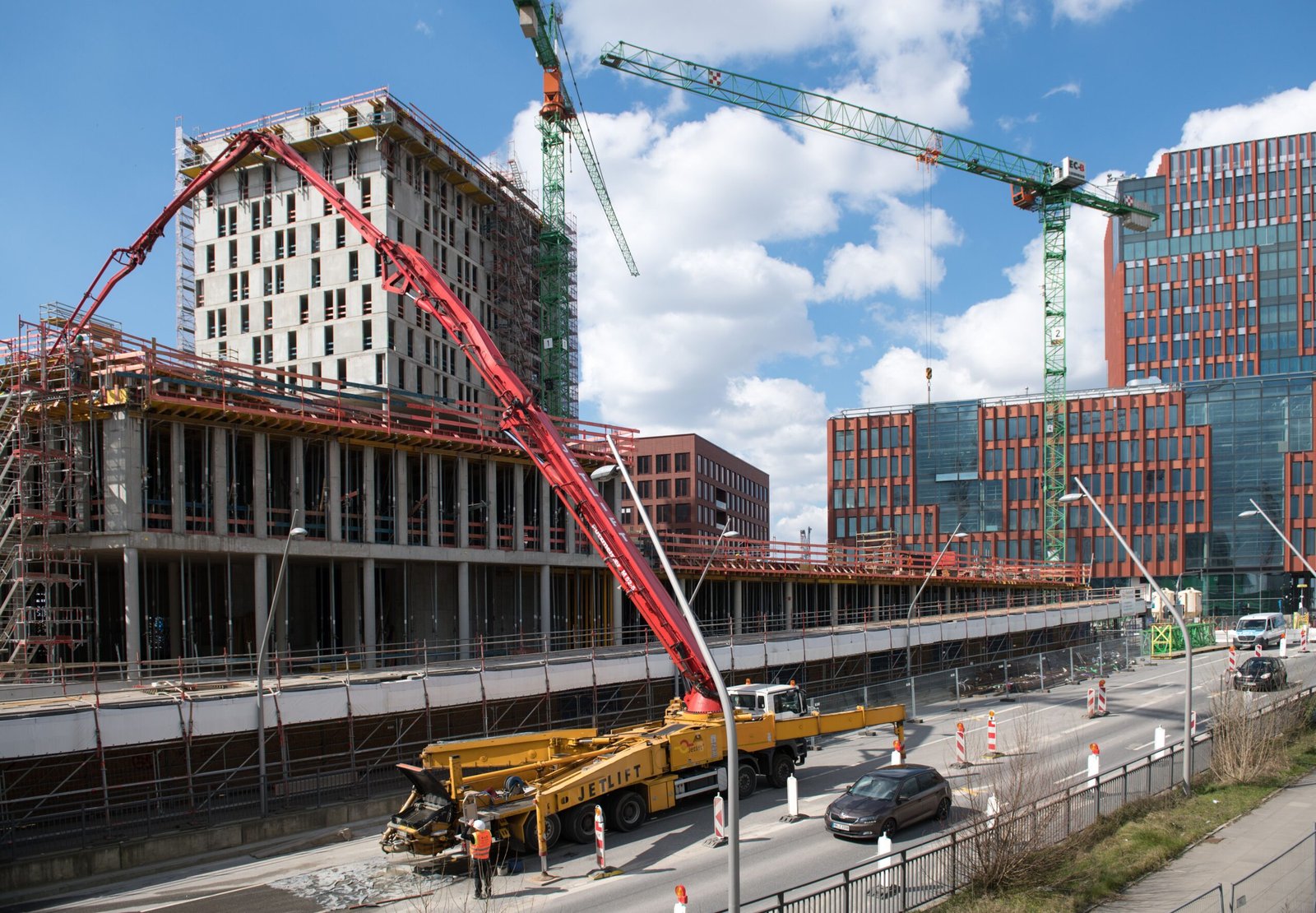
The result can be better communication, fewer misunderstandings, improved documentation, and stronger project visibility. Technology cannot prevent every construction problem, but it can reduce the information gaps that often make problems worse.
For many companies, this may be the most realistic starting point for digital transformation.
FAQ
Q1. What is construction technology news?
Construction technology news covers new tools, innovations, software, equipment, materials, and methods affecting the construction industry. It can include developments involving AI, robotics, drones, BIM, 3D printing, smart materials, and digital project management. It also explores how these technologies influence safety, productivity, costs, and sustainability.
Q2. What are the latest trends in construction technology?
Major trends include artificial intelligence, drones, robotics, digital twins, connected construction software, advanced materials, and 3D printing. Companies are also increasingly interested in automation and data-driven decision-making. The most important trend may be the integration of several technologies rather than relying on one tool.
Q3. How is AI being used in construction?
AI can help analyze project information, identify potential risks, support scheduling, detect patterns, and improve decision-making. Some systems can also assist with document management and project monitoring. Its strongest role is often supporting human professionals rather than completely replacing them.
Q4. Are construction robots replacing workers?
Robots are generally being developed to assist with specific repetitive, physically demanding, or hazardous tasks. Skilled workers are still essential for supervision, problem-solving, quality control, coordination, and complex work. In many cases, robotics may change job responsibilities rather than simply eliminate construction jobs.
Q5. Why are drones useful on construction sites?
Drones can capture aerial images, survey large areas, document progress, and help teams inspect locations that may be difficult or dangerous to access. They can also create useful visual records throughout a project’s development. Their value comes from providing information quickly without requiring workers to physically reach every location.
Q6. Will technology make construction more sustainable?
Technology can support sustainability by improving material efficiency, reducing waste, optimizing energy use, and helping teams plan projects more accurately. Digital tools can also make it easier to monitor resource consumption and building performance. However, technology alone cannot guarantee sustainability; design choices, materials, regulations, and responsible project management still matter.
Conclusion
Construction is entering an era where the blueprint is no longer the only thing shaping a building’s future. Artificial intelligence can help teams think through risks, drones can provide a bird’s-eye view, robots can handle repetitive work, digital twins can preserve a building’s digital memory, and smart systems can connect everyone involved in a project.
Yet the most important story behind construction technology news is not about machines replacing people. It is about giving people better ways to solve old problems.
A construction worker’s experience, an engineer’s judgment, an architect’s imagination, and a project manager’s leadership remain valuable. Technology simply adds another layer of capability.
The construction sites of tomorrow may look very different from those of yesterday. But the purpose remains beautifully familiar: turning an idea on paper into something real, useful, and lasting. The question is no longer whether technology will reshape construction. The more interesting question is how boldly the industry will choose to build the future.